


ESET Honored on CRN 2026 Security 100 List
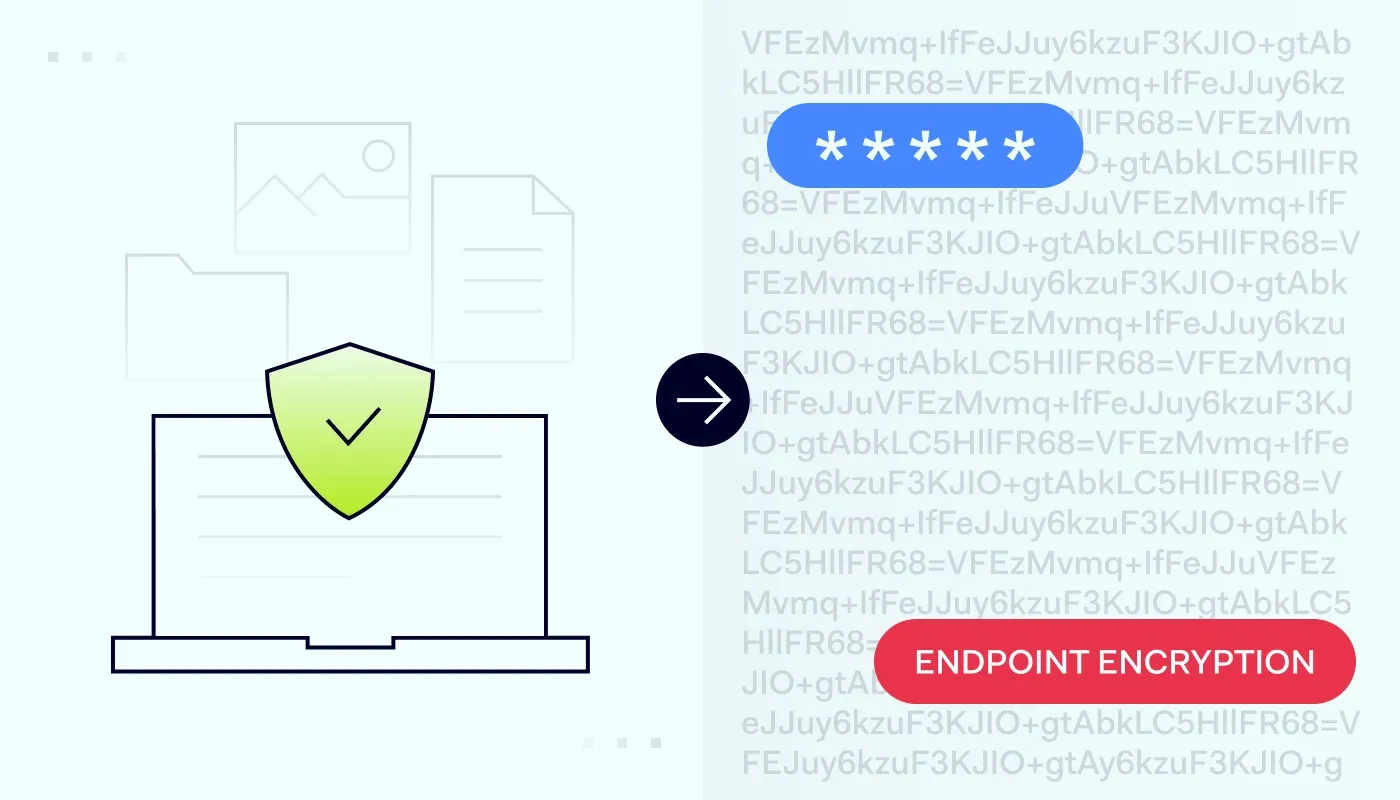
Summary: Endpoint encryption secures data by making it unreadable without a decryption key, protecting lost or stolen devices from breaches.
How It Works
Encryption transforms your data into unreadable ciphertext using advanced algorithms:
- AES-256: The gold standard for data at rest.
- ChaCha20: High-performance encryption for data in transit (VPNs).
- RSA: Used for secure key exchange and digital signatures.
Full-Disk vs. File-Level Encryption
| Type | Full-Disk Encryption (FDE) | File/Folder Encryption (FFRM) |
|---|---|---|
| 範疇 | The entire drive and OS | Specific files or folders |
| Best For | Stolen laptops | Cloud sharing & attachments |
5 Key Business Benefits
- Compliance: Meets GDPR, HIPAA, and PCI-DSS standards.
- Remote Security: Protects data in cafes, airports, and public Wi-Fi.
- Theft Protection: Neutralizes the risk of physical hardware theft.
- Centralized Control: Manage all device security from one portal.
- MFA Integration: Strengthens access control with Multi-Factor Authentication.
For small and medium businesses, a layered approach—combining tools like NordLayer and CrowdStrike—ensures that even if a device is lost, your data remains a “secure island.”