









"The ease of setup allowed for a seamless integration into our existing infrastructure. The platform's robust features, including advanced threat detection and real-time monitoring, provide comprehensive protection against cyber threats."

"Guardz offers a thorough service. External, internal, phishing, and compliance/training are all under one umbrella. Reasonably priced for small to medium-sized enterprises. A very well-developed platform."

Guardz helps solve cybersecurity issues by providing additional layers of protection in conjunction with existing malware protection software. This approach ensures that all managed systems are shielded from potential threats, with an all-in-one dashboard

"Guardz has excellent external scans and monitoring, a anti-spam engine, using API instead of a Gateway. It has DLP for SaaS applications, an employee security training tool, endpoint monitoring, AI phishing simulation, all hooking into Microsoft API’s."

"Guardz provides my clients the exact cybersecurity protection needed, when it comes to service and price. We are all small businesses and I was looking for a partner who could provide me and my clients an enterprise level capability with the personal care an SMB needs."


Spear Phishing
Hackers use this targeted form of phishing to gather information about businesses to draft personalized and convincing messages that are more likely to succeed.

Email Phishing
Phishing emails, imitating trusted sources, aim to trick recipients into giving away sensitive information by clicking on harmful links or downloading infected attachments.

Social Engineering
Hackers use this tactic to manipulate individuals into divulging confidential information or performing actions that may not be in their best interest.

Whaling
These attacks, aimed at senior executives within businesses, seek to trick them into revealing sensitive information or conducting major money transfers.

Employee Negligence
Security is a team sport , it's not just the responsibility of security and IT pros but requires all employees to understand the risks and how to avoid pitfalls.

Malicious Downloads
Malicious downloads from risky websites, deceptive emails, or pop-up ads, can harm a business's system once unknowingly downloaded and opened by users.

Operational Damage
Phishing attacks can cause financial fraud, leading to legal issues, reputation damage, and loss of customer trust.


Real-time
Alerts
The Power
of AI
Customized
Campaigns
Automated
Scheduling
Soft
Landing

Generate
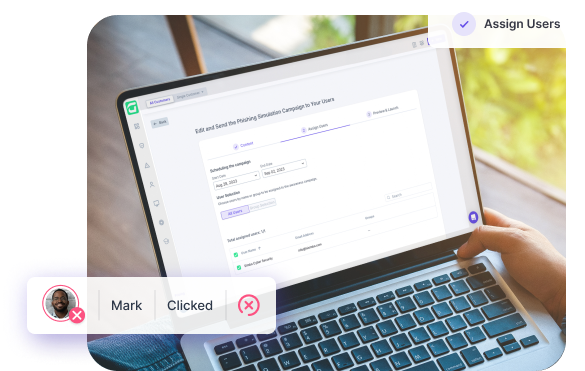
AI generates within a few seconds a personalized email template to be sent as part of the simulation using the values you’ve added. You can re-generate the content until you find the version you like.

Launch
Once you are happy with the content and have narrowed down the users and groups you want to target in the campaign, click ” Assign,” and the simulation will be sent.

Report
After you activate the Phishing simulation, the results can be tracked in the simulation results. You can see the send rate, open rate, and click rate and which user clicked on the phishing link.
Remediate
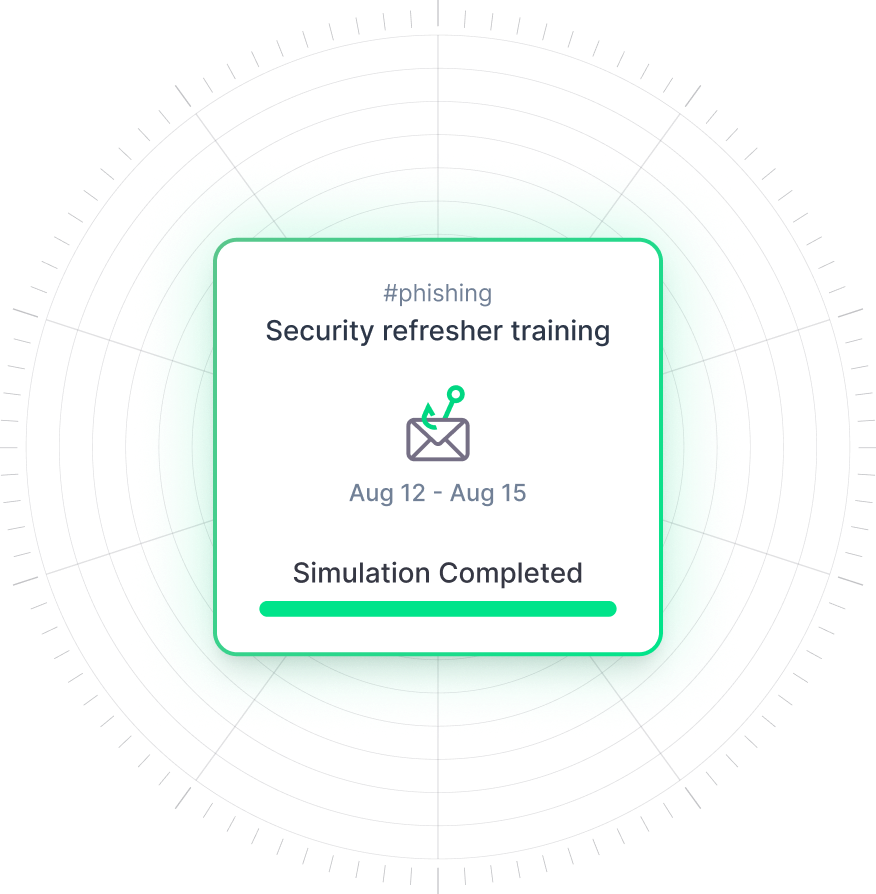
AI generates within a few seconds a personalized email template to be sent as part of the simulation using the values you’ve added. You can re-generate the content until you find the version you like.

We believe in taking a comprehensive approach to cybersecurity. Our holistic protection encompasses all layers of defense, providing a unified shield against threats and vulnerabilities, ensuring your organization’s security is robust and thorough.

When it comes to managing multiple clients, it can be overwhelming to address every potential threat. Guardz enables you to seamlessly oversee and navigate your portfolio of clients’ threats from the start, saving you time.

Centrally navigate the security of multiple clients, each with their unique environments and potential attack vectors, from a single platform, ensuring efficiency, better visibility, and consistency when securing your clients’ systems and data.

With one-click remediation and powerful integrations, even non-security experts can swiftly respond to cyber events.